Encoder Troubleshooting FAQ
Troubleshooting
Q1. Can you inspect or repair an encoder?
Yes. First, please contact us through this form with the information below. Depending on the situation, the product may not actually be damaged.
Please provide as much detail as possible.
• Model number
• Approximate purchase date
• Period of use
• Mounting method
• Whether the signal cable has been extended
• Description of the problem
• Which signal is not being output
• Details of any mechanical malfunction
Q2. There is regular noise on the encoder output waveform. What is the cause?
Spike-like noise may appear on the flat portion of the encoder square-wave output, and its level can vary depending on cable length.
The cause is the stray capacitance between signal lines inside the cable. When the A and B phases switch at rising and falling edges, they affect each other and create this noise.
For example, when A phase is at a high level, the rising edge shock of B phase can appear as noise above the A-phase high level.
Likewise, when A phase is at a low level, the falling edge of B phase can create downward noise.
To reduce this effect, use a smaller load resistor, shorten the cable, use a cable with lower stray capacitance, or connect the cable shield to the 0 V line. These measures help reduce the noise level.
In principle, there is no problem at all as long as the noise remains outside the H and L detection range of the system input.
Also, since after A phase becomes high, B phase becomes high and the count increments, even if A phase fluctuates in the middle, it does not cause a count-up, so this is generally not a problem.
Q3. Can a product that has been used for more than 10 years be repaired?
If the product has been used for more than 100,000 hours, there is a high possibility that the LED light output has deteriorated, so we recommend purchasing a new unit.
Q4. Can the wire be replaced on wire-type linear scales, MLS series and MLA series?
Yes, it can.
However, we will first inspect the product to check for encoder output issues, mechanical abnormalities, and other problems, so please send the product to us first.
Q5. While using a wire-type linear scale, MLS series or MLA series, the count occasionally becomes incorrect. Is it defective?
If the control equipment allows the wire to remain pulled out and the wire vibrates due to its own weight, such as fluttering or impact-like vibration, the encoder may not be able to follow correctly.
Please make sure the wire is used in a condition with as little vibration and whipping movement as possible.
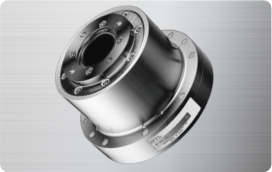
Q6. While using a hollow-shaft type encoder, the count sometimes becomes incorrect. Is it defective?
Please check the encoder mounting condition.
If the mounting section is slipping, correct counting may not be possible.
You can see the mounting method for hollow-shaft type encoders here.
Q7. Should the encoder ground wire, shield wire, be connected on the equipment side?
To improve noise resistance, we recommend connecting the shield wire of the encoder cable to FG, ground.
We also believe it is better for the customer-side PCB board to be connected to FG, ground, in the same way.
However, this does not apply if there is a noise source on the FG side.
Q8. The encoder signal is no longer being output. What could be the cause?
There are several possible causes. Some typical examples are listed below.
1. Reverse connection of Vcc and GND power supply
This may be caused by wiring mistakes or connector connection errors during installation.
Please make sure wiring is handled by qualified personnel.
2. Overvoltage
Use a regulated power supply and operate within the specified supply voltage range.
Also, be careful with wiring so that it is not affected by noise from other products.
3. Surge noise, static electricity
Below are examples of the static electricity countermeasures we use.
① Wear antistatic work clothing
② Wear antistatic shoes
③ Use a grounded mat on the workbench
④ Install a static elimination panel at factory entrances and exits
⑤ Wear a static discharge wrist strap
⑥ Install an ionizer
4. Short circuit between signal lines
A short circuit between signal lines may prevent pulses from being received correctly.
This problem is especially likely when there is unnecessary wiring or floating wires.
Please check the ends of the wiring carefully.