Why the μDD Motor Was Selected for High-Speed Positioning
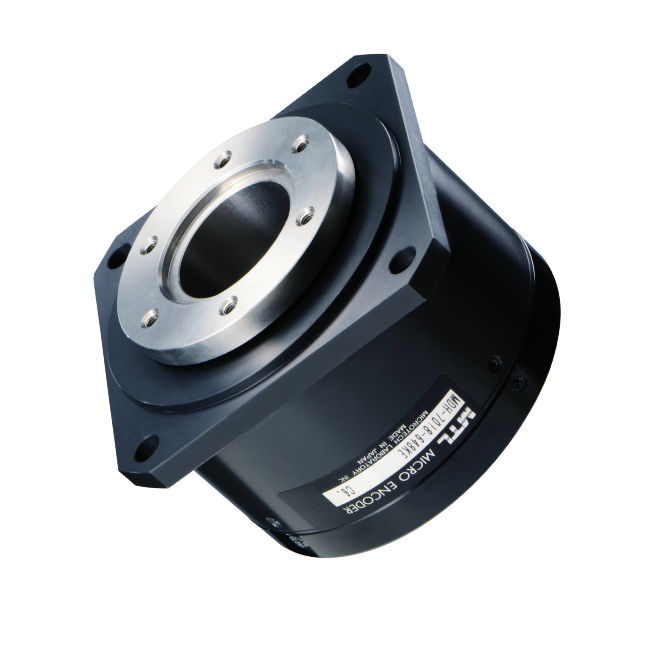
A technical article published by Digital Servo Corporation presents the results of a high-speed positioning test using an MTL μDD Motor.
This article examines the results and explains the motor characteristics required to achieve fast, stable, and repeatable positioning performance.
Common Issues in High-Speed Positioning
Pharmaceutical manufacturing equipment requires motors that are compact, precise, and capable of stable motion control.
However, the following issues often become more significant as positioning speed increases:
- Positioning errors caused by gear backlash
- Residual vibration after stopping
- Position overshoot
- Delayed response
- Variation in positioning repeatability
These issues are often addressed by adjusting control parameters. In practice, however, many positioning problems are also influenced by the motor’s mechanical and electrical characteristics.
Motor Characteristics Required for High-Speed Positioning
A motor used for high-speed positioning should provide the following characteristics.
1. A Linear Torque-Current Relationship
When motor torque responds predictably to the current command, the difference between the actual motor response and the control model remains small. This enables more stable and accurate motion control.
2. Low Variation in Motor Parameters
Motor characteristics that remain stable across changes in temperature and rotational speed help maintain consistent gain settings and improve control repeatability.
3. High Rotational Accuracy
High rotational accuracy reduces unwanted variation in the encoder feedback signal. This allows the controller to calculate rotational speed from the encoder position data with greater accuracy.
4. Low Mechanical Disturbance and Vibration
Reducing mechanical vibration and other disturbances makes it possible to achieve a higher control bandwidth while maintaining stable operation.
These characteristics are essential for allowing the motion controller to perform at its full capability.
Why the μDD Motor Is Well Suited for High-Speed Positioning
MTL’s μDD Motor provides several structural advantages that support fast and stable positioning.
Gearless Direct Drive Structure
The load is driven directly without a reduction gear. This eliminates gear backlash and helps improve positioning accuracy and repeatability.
High Mechanical Rigidity
The rigid motor structure helps suppress mechanical vibration and provides a stable response during acceleration, deceleration, and settling.
Integrated High-Resolution Encoder
The encoder is integrated directly into the motor. This reduces encoder mounting errors and provides high-quality position feedback for the motion controller.
Compact and Lightweight Design
The compact rotating structure helps reduce inertia, enabling faster acceleration, deceleration, and response to position commands.
These characteristics give the μDD Motor a high level of compatibility with advanced control systems and make it easier to achieve stable high-speed positioning.
High-Speed Positioning Test Results
The following results were confirmed during the positioning test:
- A 0.36° positioning step settled in approximately 4 ms
- Steady-state position error remained within ±1 encoder pulse
- Stable response during intermittent operation with a 10 ms cycle
- Stable operation with an 80 kHz control sampling frequency
These results indicate that the performance was not achieved by the controller alone. The motor’s predictable torque response, low mechanical disturbance, integrated encoder, and gearless construction also contributed to the stable control response.
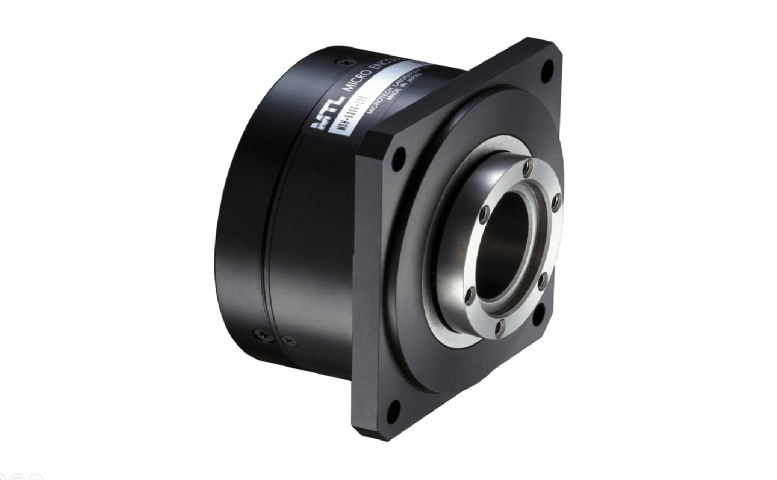
The test was conducted using an MDH-6018 Series μDD Motor.
A step response test was performed using a position reference command of 1/1000 revolution, equivalent to 0.36°.
Applications for High-Speed Direct Drive Positioning
This type of direct drive positioning system can be applied to equipment requiring fast response, precise motion, and stable settling performance.
- Precision positioning mechanisms
- High-speed intermittent motion
- Contact-force control
- Pharmaceutical manufacturing equipment
- Inspection and measurement equipment
- Semiconductor manufacturing equipment
When a machine requires extensive tuning or continues to show unstable positioning behavior, reviewing only the controller settings may not be sufficient.
Evaluating the complete motion system, including the motor structure, inertia, feedback resolution, mechanical transmission, and control parameters, may provide a more effective improvement.
For support selecting a μDD Motor for your positioning speed, load inertia, required accuracy, and installation conditions, please contact MTL.